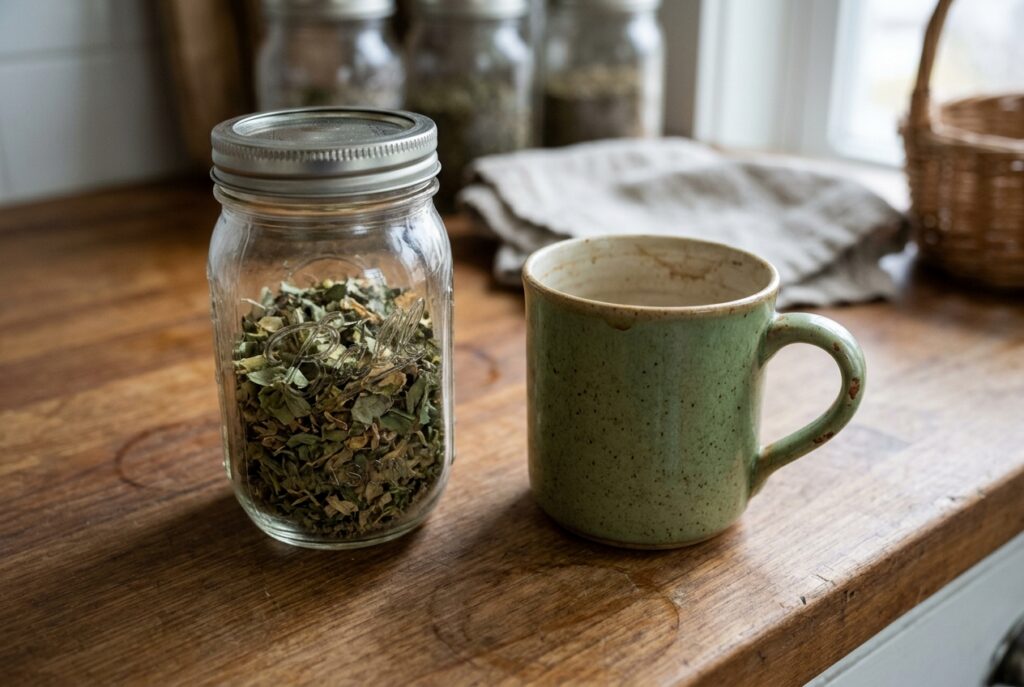
The best herbs for tea are the ones that are calm in the cup and easy in the pot. Twelve of them cover almost everything a beginner needs, and half of them you can grow on a windowsill or a balcony.
I love chamomile, especially when I’m working long night shifts. I’m not that type of person who drinks coffee or energy drinks while coding, I’m the one who drinks soothing tea to not lose my nerves, haha. Mainly because when I drink coffee in the evening, I have NO issue falling asleep. Coffee just doesn’t work on me like on other people.
This is the short version in two halves. First, six herbs for tea to sip in the evening, with how to brew them and the one thing to know about each. Then six to grow for your own cup, with what they like and when to pick them. I checked the safety parts against the European Medicines Agency, the NIH and the NHS, and the growing parts against university extension services. The links are at the end, if you’re a research nerd like me.
What are herbs for tea?
Herbs for tea are leaves, flowers or roots that you steep in hot water to make a herbal tea, also called a tisane. Most don’t contain the tea plant itself, so they are naturally caffeine-free. You can buy them dried, or grow, dry and brew your own.
Quick rules for brewing herbs for tea
- Use a teaspoon of dried leaves or flowers, or a small handful of fresh leaves, for a mug. Roots are different: they are simmered, not steeped.
- Pour hot water over the herb, cover the cup and wait five to ten minutes. Covering keeps the scent in the cup instead of in the kitchen.
- Strain, then taste before you add anything. Honey or a slice of lemon is plenty.
- Try each herb on its own in a mug before you mix. That way you know which one your body likes or doesn’t.
- Treat a herbal tea like food, not medicine: a cup or two is a drink, and “traditionally used” means people have used it for a long time, not that it is proven.
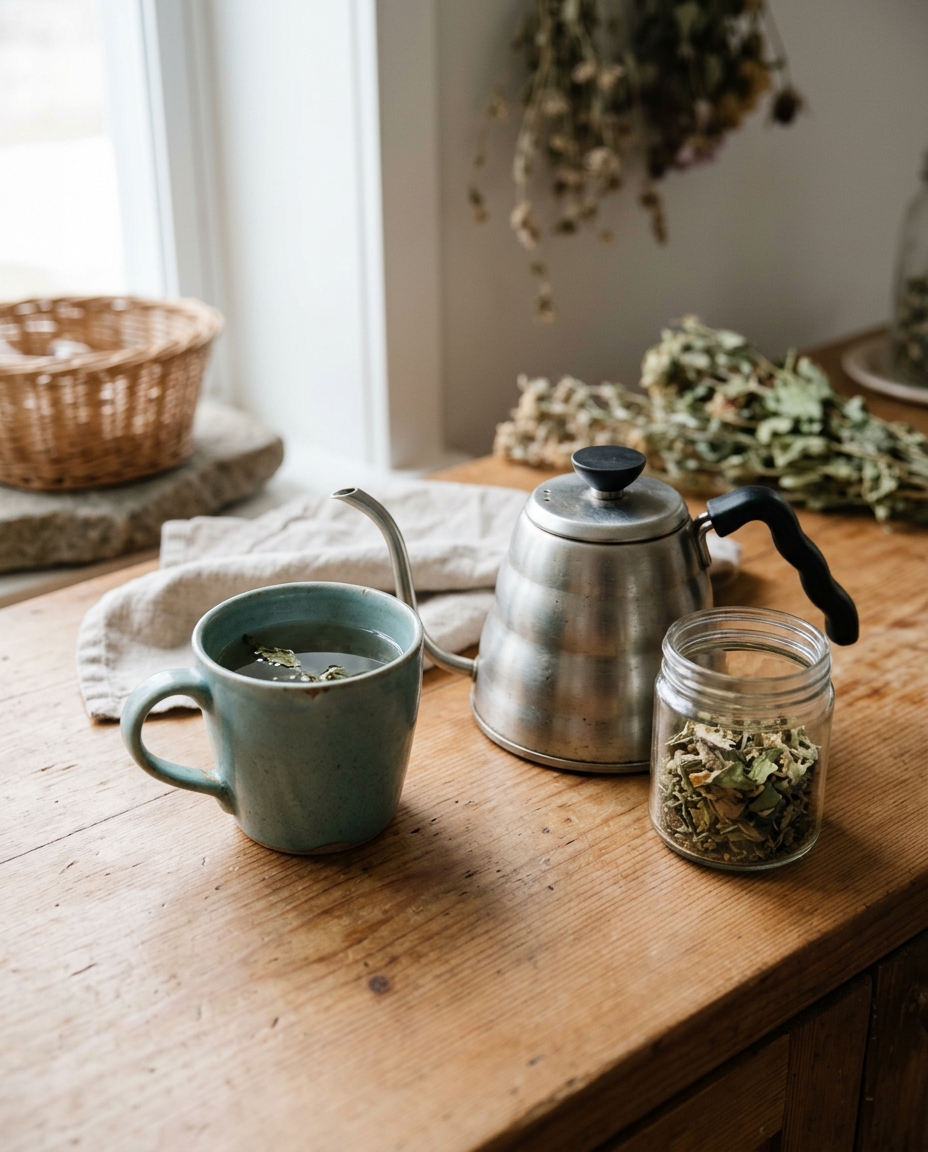
6 herbs for tea to sip in the evening
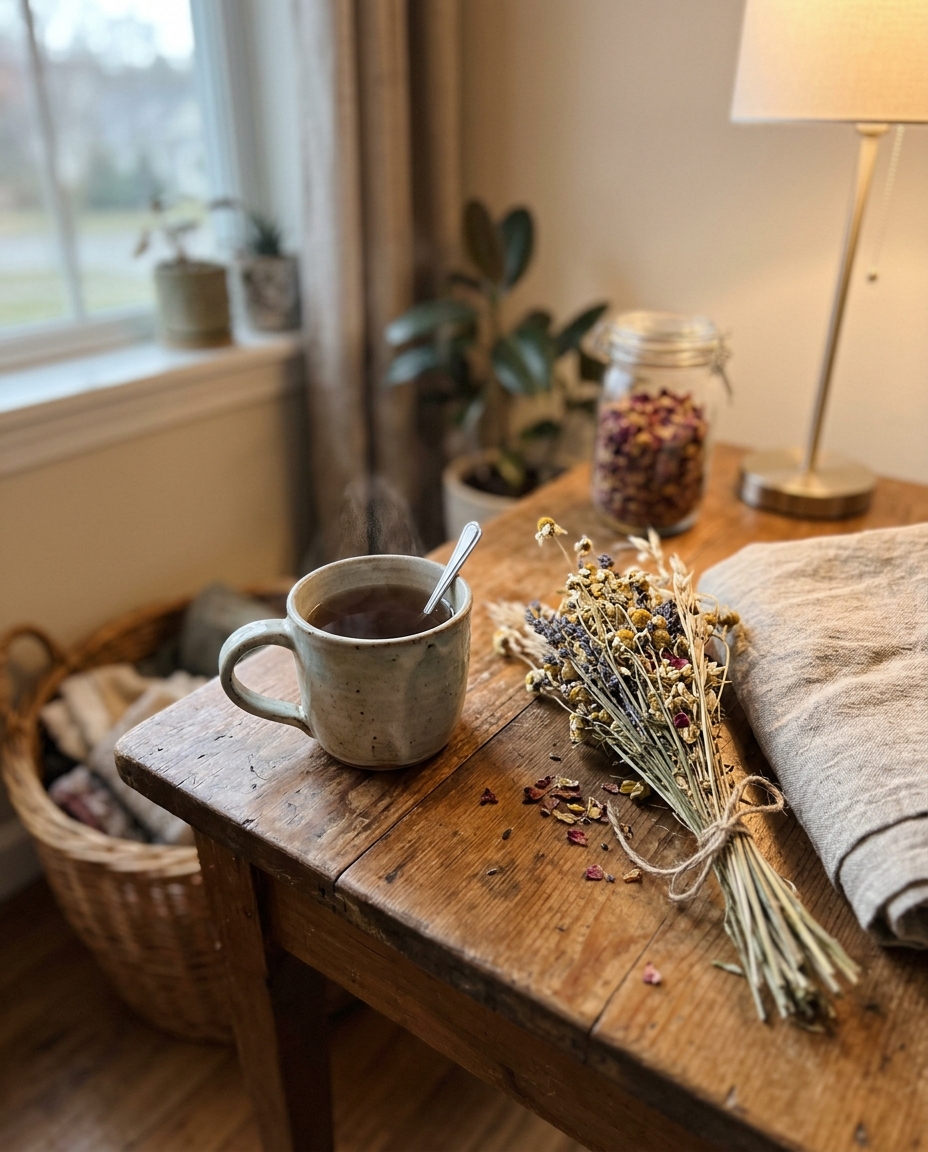
1. Chamomile
What it brings: a soft, apple-like sweetness. It’s the cup people reach for when the day was long.
How to brew it: a teaspoon of dried flowers, covered, for about ten minutes.
Know this: chamomile belongs to the daisy family. The NIH says people who are allergic to related plants such as ragweed are more likely to react, and some reactions can be severe. It has also been reported to interact with some medicines, including the blood thinner warfarin. It’s the gentlest cup on this list: the European Medicines Agency (EMA) covers chamomile tea for mild tummy upsets such as bloating, even for small children, but for a child, ask a pharmacist first. If symptoms last more than a week, see a doctor.
2. Lemon balm
What it brings: a gentle lemon scent with a minty edge. It’s the herb people most often pair with a quiet evening.
How to brew it: a small handful of fresh leaves, or a teaspoon of dried, covered, for five to ten minutes. Fresh keeps more of the scent.
Know this: the EMA lists lemon balm tea as traditionally used for mild stress, sleep and mild digestive upsets, for adults and children over 12, and says to see a doctor if symptoms continue after two weeks. It can make you drowsy, so don’t drive after a cup.
3. Lavender
What it brings: floral, a little sweet and a little perfumed. Think of it as a pinch, not a spoonful.
How to brew it: a small pinch of dried flower buds, steeped in a covered cup for about ten minutes. Use culinary lavender, not the kind sold for potpourri or sprays.
Know this: the EMA says lavender flower tea is not recommended for children under 12, that safety in pregnancy and breastfeeding has not been established, and that it can make you drowsy. The NIH says lavender might interact with some sedative medicines or herbs.
4. Linden flower
What it brings: a honeyed, slightly woody scent. In Europe it’s the old-fashioned cup for a cold, or for a wind-down.
How to brew it: a teaspoon of dried flowers, covered, for about ten minutes.
Know this: the EMA lists it for colds and mild stress. It says it’s not recommended for children under 4 for a cold or under 12 for stress, and that use in pregnancy and breastfeeding isn’t recommended because there isn’t enough data. If a cold lasts more than a week, or you get a high fever or struggle to breathe, see a doctor. If you’d like to give it to a child, ask a pharmacist first.
5. Passionflower
What it brings: a grassy, slightly bitter cup. It tastes more like a tonic than a treat.
How to brew it: a teaspoon of the dried herb, covered, for ten minutes.
Know this: the NIH says not to use passionflower while pregnant, because it may bring on uterine contractions. Alongside anaesthesia it might slow your nervous system down too much, so tell your doctor if you’ve had it in the two weeks before an operation. The EMA says it isn’t for children under 12, and that it can make you drowsy, so don’t drive after it.
6. Peppermint
What it brings: a clean, cooling taste. This is the after-dinner cup rather than the bedtime one.
How to brew it: a small handful of fresh leaves, or a teaspoon of dried, covered, for five to ten minutes.
Know this: the EMA lists peppermint leaf tea for mild digestive complaints such as indigestion and wind, for adults and children over 4, and says to see a doctor after two weeks. Small print, said nicely: it can make heartburn and reflux worse, and people with gallstones should be careful.
6 herbs for tea to grow in your own garden
Mine was peppermint in a pot. When I was 18, I truly wanted to start my own windowsill, you know, those cute Pinterest photos. I was all about that back then. Since then I’ve loved peppermint, and it had a tradition in our home.
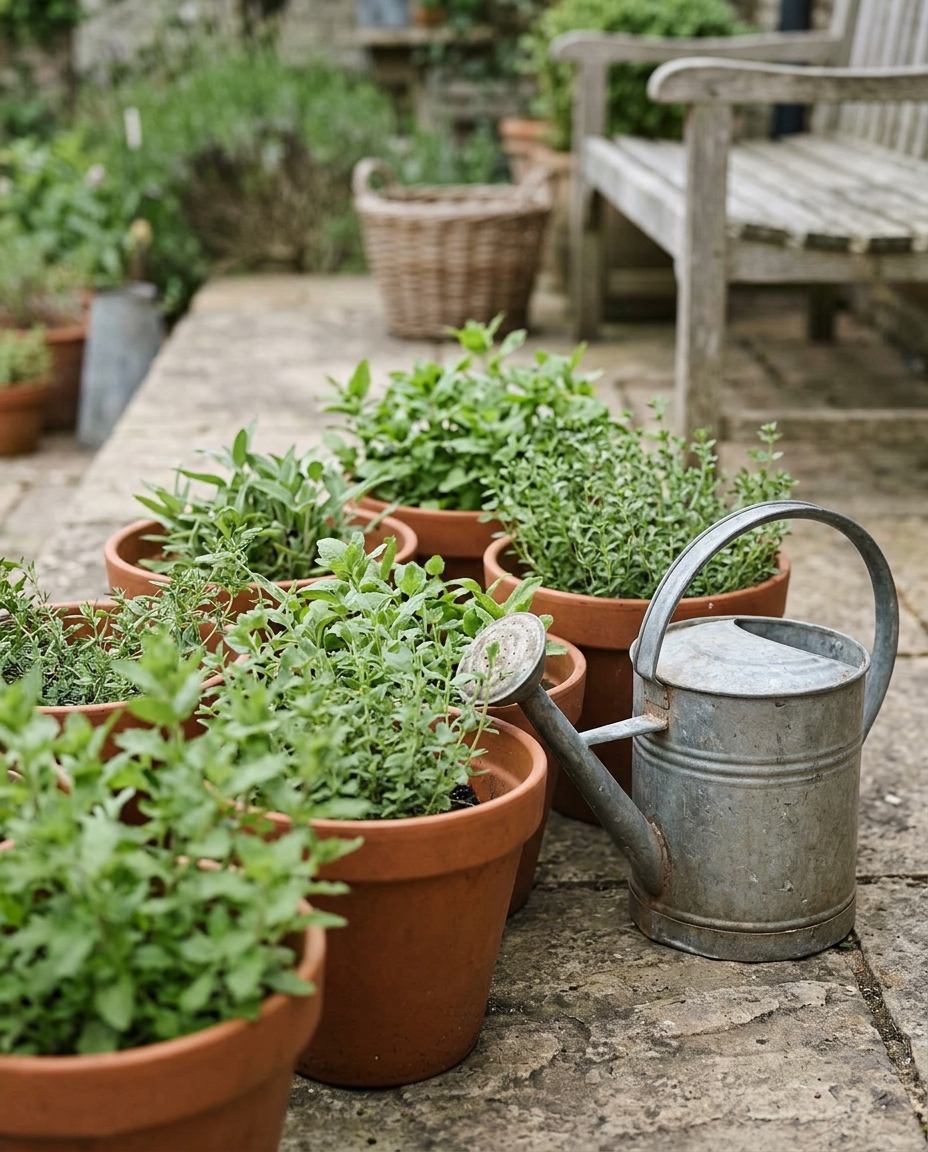
You don’t need a garden. A pot with a drainage hole and a sunny windowsill or balcony is enough for most of these. Pick on a dry morning after the dew has gone, and hang the rest to dry; my guide to how to dry herbs at home covers the how.
1. Mint
What it brings: peppermint is the sharp, cool one; spearmint is the softer, sweeter one.
How to grow it: in a pot, always. Illinois Extension says mint spreads aggressively through underground stems and highly recommends growing it in containers above ground. Full sun is best, light shade is fine. Cut often for new, tastier growth, and snip off flower spikes to keep the flavour.
Know this: Utah State University Extension says to harvest just before it flowers, because blooming reduces the oil and flavour of the leaves.
2. Lemon balm
What it brings: the lemon cup from the first half, from your own pot.
How to grow it: University of Wisconsin Extension says it likes full sun and well-drained soil, grows into big clumps and can reseed aggressively, so cut off the flowers if you don’t want lemon balm in places you never invited it. Cut it back hard after flowering for a fresh flush of leaves.
Know this: the same source says dried leaves lose much of their aroma, so use it fresh when you can. It is also one of the three herbs in my guide to 3 easy herbs to grow for beginners.
3. German chamomile
What it brings: the little daisy flowers for the chamomile cup.
How to grow it: University of Vermont Extension says to sow the seed lightly on the surface about a month before the last frost, and that it reseeds readily. Pick the flowers as they near full bloom and dry them on a tray.
Know this: German chamomile is the one the EMA’s chamomile tea advice is about. The daisy-family allergy warning above applies to the plant in your garden too.
4. Anise hyssop
What it brings: leaves and flowers that smell of liquorice, in a tea that’s sweeter than you’d expect.
How to grow it: NC State Extension says it takes full sun or partial shade and well-drained soil, and that it’s a perennial that self-seeds. It needs good drainage, because soggy soil can rot the crown. Bees and butterflies love it.
Know this: University of Vermont Extension says the seeds need cold and light to germinate, so sow it lightly on the surface about a month before the last frost. I couldn’t find an EMA tea monograph for it, so keep it to an ordinary cup now and then.
5. Bee balm
What it brings: a minty, citrusy tea from the leaves, with edible flowers to float on top.
How to grow it: NC State Extension says it likes full sun and moist but well-drained soil, spreads quickly through underground stems and can get powdery mildew. Water at the base of the plant, not over the leaves.
Know this: the same source says the Oswego people of New York used the leaves for tea, which is where its other name, Oswego tea, comes from. As with anise hyssop, there is no EMA monograph for it, so keep to an ordinary cup.
6. Lemon thyme
What it brings: a citrusy, savoury cup that’s lovely when the weather turns.
How to grow it: University of Vermont Extension says it’s hardy in USDA zones 5 to 9 and can be hard to grow from seed, so buy a starter plant. Cut stems, tie them in a small bunch and hang them to dry.
Know this: the flavour is strong, so steep one or two stems and taste. Washington State University Extension adds not to take big harvests from woody herbs like thyme in late summer or autumn, because the new growth may not toughen up before winter.
Is herbal tea safe? The bits worth knowing
Herbs are for everyday things: a tummy that’s too full, a mind that won’t switch off. Anything serious goes to a doctor.
Pregnancy and breastfeeding. The NHS says there isn’t much research on herbal teas in pregnancy, so it’s safest to limit them, to no more than four cups a day, and to avoid teas with liquorice root. For the calming herbs in the first half (lemon balm, lavender, linden, passionflower), the EMA says safety hasn’t been established, and the NIH says to skip passionflower while pregnant. If you’re pregnant or breastfeeding, ask your midwife, doctor or pharmacist before you start.
Medicines. Please don’t stop your medication, and don’t swap it for tea. Chamomile has been reported to interact with the blood thinner warfarin, lavender might interact with some sedatives, and passionflower might slow you down too much alongside anaesthesia, so mention it if you have an operation coming up. On any medicine at all, a quick word with a pharmacist is DEFINITELY worth it, especially if, like me, you’re no expert.
Children. For lemon balm, lavender, passionflower and linden for stress, the EMA says not under 12. Peppermint tea, and linden for a cold, start from 4. Chamomile tea is the gentle exception, covered for a tummy upset even in small children. Those are EU rules for herbal medicines; the NIH only says chamomile is possibly safe for children short term, and the NHS gives no ages. So before you make any of these for a child, ask a pharmacist.
How long. The EMA says to see a doctor if symptoms last more than a week with chamomile or linden for a cold, and more than two weeks with lemon balm, peppermint or passionflower. Lemon balm, lavender and passionflower can also make you drowsy, so skip the car after a cup.
If something goes wrong. If someone has a swelling lip or face, trouble breathing, or a rash after a daisy-family tea, contact emergency services immediately.
Herbs for tea FAQ
What are the best herbs for tea?
For an evening cup, chamomile, lemon balm, lavender and linden flower are the classics. For growing, mint, lemon balm and chamomile are the easiest places to start.
Can I use herbs from my garden for tea?
Yes, as long as you’re completely sure which plant it is and it hasn’t been sprayed. Pick on a dry morning, rinse if needed, and use fresh or dried.
Can I mix herbs for tea?
You can, but try each one on its own first so you know how you react. Lemon balm with a little mint is a gentle place to start.
Are herbal teas caffeine-free?
Teas made only from herbs, flowers and leaves other than the tea plant are naturally caffeine-free. Check the box if it’s a blend, because some contain green or black tea.
One last question
Which herb would you plant first for your own cup, and which one would you quietly leave out? Tell me, I’m curious. And if you like the look of these as much as the taste, the plates are in The Calm Cup image pack. If you like a cupboard full of jars that do things, my guide to starting a home herbal apothecary is next, and there’s a lot of old stories behind some of these herbs in old plant folklore.
miru
I’m not a herbalist, just a curious person learning in public. This isn’t medical advice.
Sources
- EMA: Matricariae flos (chamomile flower), herbal medicine page
- EMA: chamomile flower (Matricaria recutita) herbal monograph
- EMA: Melissae folium (lemon balm leaf), herbal medicine page
- EMA: Menthae piperitae folium (peppermint leaf), herbal medicine page
- EMA: peppermint leaf herbal monograph (revision 1)
- EMA: lime flower herbal monograph
- EMA: lavender flower herbal monograph
- EMA: Passiflorae herba (passion flower), herbal medicine page
- EMA: passion flower herbal monograph (revision 1)
- NIH NCCIH: chamomile
- NIH NCCIH: lavender
- NIH NCCIH: passionflower
- NHS: foods to avoid in pregnancy (herbal teas)
- Washington State University Extension: growing an herbal tea garden
- University of Vermont Extension: growing herbs for tea
- Utah State University Extension: mint in the garden
- University of Illinois Extension: mint
- University of Wisconsin Extension: lemon balm
- NC State Extension: bee balm (Monarda didyma)
- NC State Extension: anise hyssop (Agastache foeniculum)