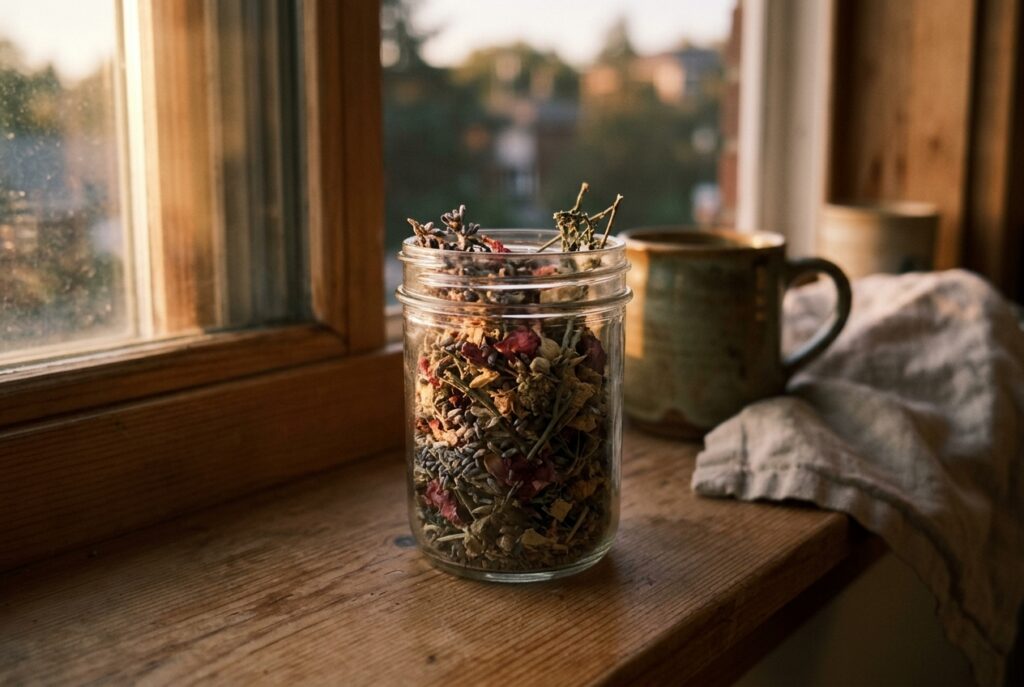
Plant folklore is the pile of old stories people tied to ordinary plants: a rowan twig over the door, St John’s wort hung up at midsummer, a pillow stuffed with mugwort. Most of it isn’t science, and a lot of it is lovely.
In my family it was garlic on buttered bread when you’re feeling under the weather, onion tea (honestly my best go-to for when flu hits) and lemon balm, to ease the nerves, especially before a big exam when I was studying. It helped me relax. Those were just the basics, though. Forsythia, brings new hope and life into the home over the Easter holidays, so it always had to be part of the Easter decorations, in vases on the tables.
This is a tour of 30 herbs and the stories people told about them, with the country or period for each, so nothing is just “since ancient times”. I checked it all against museums, tree charities and universities, and the links are at the end, if you’re a research nerd like me. Folklore is what people believed, not what’s proven, so there’s a short safety part at the bottom. Several of these plants are better admired than used.
What is plant folklore?
Plant folklore is the beliefs, customs and stories ordinary people attached to plants over the centuries: which ones guarded the door, which brought dreams, which belonged to a festival. It travelled by word of mouth, so it changes from place to place, and it isn’t proof that a plant works.
Quick rules for reading plant folklore
- Folklore is what people believed. Enjoy the story and skip the cure.
- Look for a place or a date. Where a story names a country or a century, I’ve kept it. Where it only says “ancient”, I haven’t trusted it.
- Look, don’t taste. Never copy an old recipe or remedy, especially for the plants marked as poisonous.
- Versions disagree. When two places tell it differently, both can be true as stories.
- Only pick a wild plant for a custom if you’re 100% sure what it is, and leave rare ones alone.
Plant folklore for protecting the door
1. Rowan
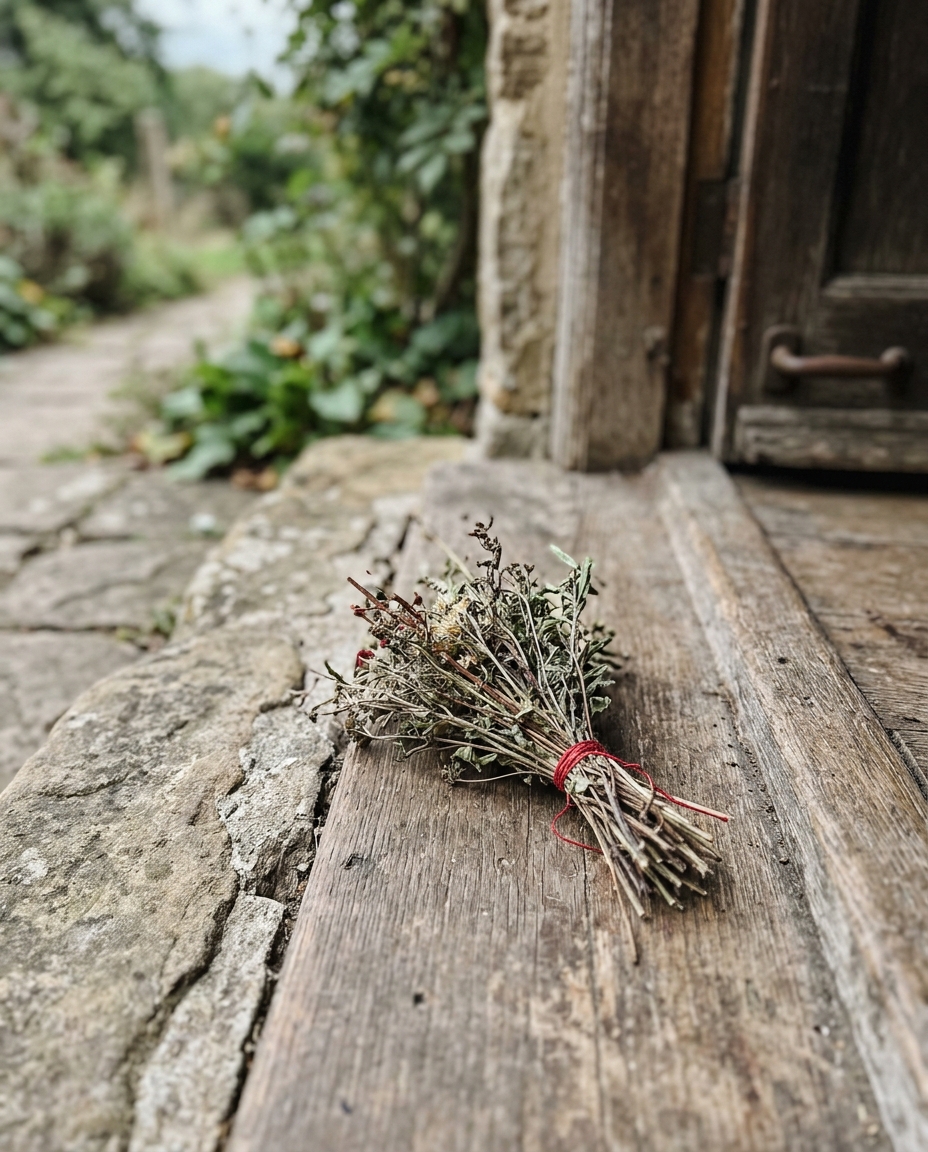
The folklore: a twig or cross hung over the door to keep harm out.
The story: rowan has been called a tree of protection in the British Isles for a very long time. On the Isle of Man people made crosses from rowan twigs without using a knife and hung them over the lintel every May Eve, and from Scotland to Cornwall little crosses bound with red thread were sewn into coat linings or carried in a pocket. Red was thought to be the strongest defence against magic, which may be why the bright berries got the credit. In the Scottish Highlands cutting one down was taboo.
2. St John’s wort
The folklore: hung over the doorway at midsummer to chase off evil.
The story: it flowers around 24 June, St John’s Day, which is where the name comes from. Midsummer was thought to be a time when evil spirits were more active, so a plant blooming right then looked like a small light in the dark. Superstitious Scots hung it over doorways, and an older name for it was “chase devil”.
Know this: it’s a real medicinal plant with a real catch. It can stop other medicines working properly, including the contraceptive pill, some antidepressants and blood thinners, and it can make your skin burn more easily in strong sun. It isn’t recommended for under-18s, or in pregnancy and breastfeeding. If you take any medicine, ask a doctor or pharmacist first.
3. Mistletoe
The folklore: a sprig hung high at Christmas, with a kiss for whoever stands under it.
The story: the Romans hung mistletoe over doorways for protection, and in Norse myth it’s the plant behind the death of the god Baldr. Kew says nobody knows exactly where the kissing tradition started. A Kent museum notes that kissing under it was popular in 16th-century England, and that hanging it indoors was said to protect a house from fire or lightning. The Victorians made it a Christmas fixture.
Mistletoe is THE decoration no one in my family goes without. Honestly, when I was little I never understood why. Mistletoe is a freaking parasite, and still it had the tradition of keeping love between the two who kissed below it. It hangs every Christmas from the ceiling lamp in the room we hang out in the most over Christmas: at my parents’ house in the kitchen, at my grandma’s it was in the living room.
Look, don’t use: every part of mistletoe is poisonous to people, leaves and stems more than the berries. It’s one to hang out of reach and never eat.
4. Birch
The folklore: bundled twigs used to sweep out the old year and its spirits.
The story: in Celtic tradition birch twigs were bundled at Samhain, the start of the old Celtic year, to drive out spirits, and that later turned into “beating the bounds”, when English parishes walked their boundaries with birch rods. In Ireland branches were laid on the dead as they were carried to the grave, as a sign of new life. In Wales a birch wreath was a love token.
5. Chives
The folklore: dried bunches hung around the house against illness and evil.
The story: in Romanian folklore, and among Romani families, bunches of dried chives were hung in the home to keep disease and bad luck out. It’s the same plant that sits by the kitchen door in half the gardens you know.
6. Chervil
The folklore: seeds tossed on the midsummer fire, and a soup eaten for new life at Easter.
The story: in Morocco and Algeria chervil seeds were thrown on Midsummer fires so the smoke would pass over children, fields and homes. A Holy Thursday soup, with chervil leaves stirred into potato or chicken soup, was eaten at Easter for new life.
7. Self-heal
The folklore: a holy herb, sent to drive the devil away.
The story: self-heal was once thought of as a holy plant, sent by God to cure people and animals and to drive the devil off. Children in 19th-century Hampshire were warned that if they picked it, the devil would carry them away. Its other old name, heal-all, shows how much people expected of a small purple flower that grows in lawns and doesn’t much care whether you mow it.
Plant folklore for dreams, midsummer and fairies
8. Mugwort
The folklore: kept under the pillow for vivid dreams.
The story: the Horniman Museum in London says mugwort has a folklore history in Europe going back to the Middle Ages. It was thought to fend off evil spirits and to bring vivid or prophetic dreams when it was kept under a pillow or burned at night. Its Latin name, Artemisia, links it to the Greek goddess Artemis. The Weald and Downland museum in Sussex adds that at the summer solstice it was mixed with lavender, chamomile and rose, to attract elves and fairies.
Know this: the same museum notes that it was believed to bring on labour, and the US National Institutes of Health says mugwort shouldn’t be used in pregnancy. Little is known about breastfeeding, so skip it then too.
9. Lavender
The folklore: the longest stems made into wands, the rest hung under the eaves.
The story: a living museum in Sussex describes lavender as a herb used to freshen linen and clothes, and scattered among the rushes on the floor. At the solstice it went into the mix with mugwort, chamomile and rose to attract elves and fairies. The longest stems were made into wands, and the rest were dried and hung under the eaves.
Lavender is heavily used in my family. We all grow it, be it in the garden or on the balcony. Since I was little we’ve been making pouches for the wardrobes, to keep the moths from the clothes and make them smell good. My cousin even made soap with it, which smelled amazing. I may ask her for the recipe already…
10. Lady’s mantle
The folklore: the dew in its leaves, prized by alchemists.
The story: the leaves are shaped like little pleated cups that hold a round drop of water after rain or in the early morning. Alchemists believed those drops were the purest water there was, and used them in their attempts to turn ordinary metal into gold. The “lady” in the name is usually said to be the Virgin Mary, because the scalloped leaves looked like her cloak.
11. Hollyhock
The folklore: a flowering stalk carried at Lammas for fertile fields.
The story: in England a stalk of hollyhock in flower was carried at Lammas, the first harvest festival in early August, to ask for good crops. It’s a fitting plant for the job, because it stands taller than most cottage garden fences.
12. Wormwood
The folklore: the bitter herb behind absinthe.
The story: wormwood is very bitter, and together with fennel and anise it’s one of the herbs in absinthe, the drink of the artists’ cafés of late 19th-century Paris. France banned absinthe in 1915, during the First World War. History only: this is a plant to know about, and not one to experiment with at home.
13. Common rue
The folklore: strewn in courtrooms against gaol fever.
The story: rue was strewn in English courtrooms to protect judges and jurors from “gaol fever” carried in by prisoners. Posies of sweet herbs were held near judges for the same reason. Its old name, herb of grace, comes from bundles of rue being used to sprinkle holy water at Mass.
Look, don’t use: the sap of rue can burn skin in sunlight. Admire it where it grows, and keep the old customs as history only.
14. Sweet clover
The folklore: an old remedy against moths.
The story: sweet clover, or melilot, smells of fresh hay once it wilts and dries, thanks to a natural compound called coumarin. Berlin’s natural history museum notes that it was once used against moths, which makes it a very practical kind of folklore.
Herb folklore from the old kitchen
15. Meadowsweet
The folklore: the herb that flavoured mead.
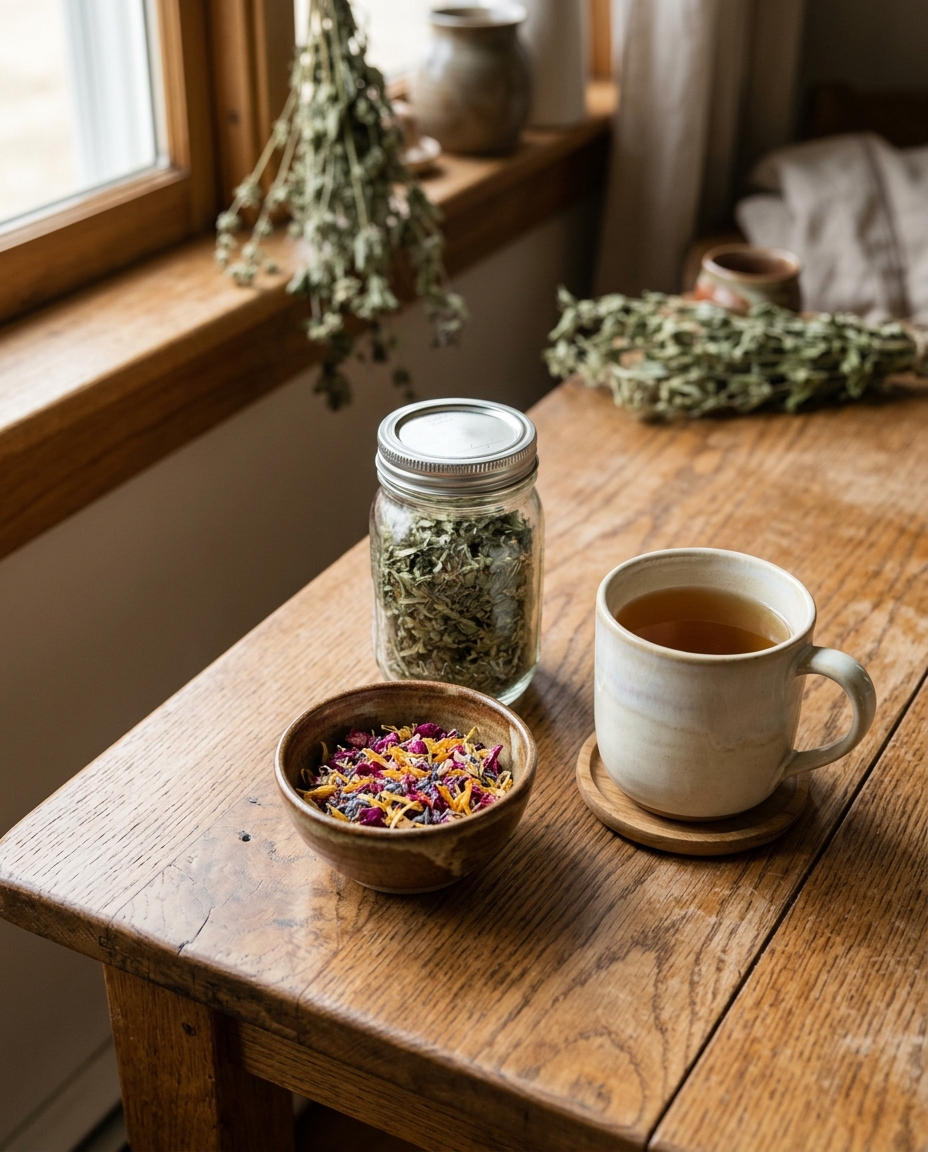
The story: the Woodland Trust says meadowsweet was used to flavour mead in Anglo-Saxon times. Its dried flowers were strewn on floors to scent the house, and Elizabeth I is said to have liked it on her chamber floors instead of straw. The Weald and Downland museum lists it among the herbs people believed were at their best when gathered at the summer solstice, then dried for the year ahead.
16. Ground ivy
The folklore: the ale herb of the shady bank.
The story: its leaves are fragrant, and Kent Wildlife Trust says they were once a popular way to make beer bitter, until hops took over the job.
17. Tansy
The folklore: a bitter Easter pudding, eaten to clear the worms of Lent.
The story: tansy pudding was an Easter dish, because the fish-heavy Lenten diet was believed to breed worms, and tansy was believed to clear them. A museum in Louth, Lincolnshire, tells of a dinner there in 1696, at a Commission of Sewers, where those who ate the tansy dish were sick, faint or in severe stomach pain, while the servants who ate other dishes felt fine.
Look, don’t use: tansy is toxic. History only, and never make it.
18. Marshmallow
The folklore: a soothing root, long before the sweet.
The story: the earliest known marshmallow recipe is from Egypt, around 2000 BCE, and the root was medicine rather than a snack, used as a syrup for coughs, digestion and irritated skin. In the 1800s the marshmallow lozenges of the time switched to gelatin, which ended the use of the plant itself.
19. Quince
The folklore: a fruit for brides in ancient Athens.
The story: a ripe quince has a strong, sweet perfume, and in ancient Greece it belonged to the goddess of love. According to Plutarch, the Athenian lawgiver Solon said a bride should eat a quince before her wedding night.
20. Saffron
The folklore: golden buns for St Lucia’s Day.
The story: in Sweden saffron colours the lussekatter, the buns baked for St Lucia’s Day on 13 December, deep in the dark winter. The Nordic Museum in Stockholm says the buns arrived with Dutch settlers in the 1600s and only got their saffron in the late 1800s, so the gold is younger than it looks.
21. Bay laurel
The folklore: the victor’s leaf.
The story: at the Pythian Games at Delphi in ancient Greece, winners were crowned with laurel wreaths, because the plant belonged to Apollo, the god of the sanctuary. Today the same leaf mostly goes into a pot of soup, which is a quieter kind of glory.
22. Barberry
The folklore: the hedge shrub blamed for blighting the wheat.
The story: English farmers once planted barberry in orchards and hedges for its sour berries, then turned against it, convinced it brought rust, a fungal disease, to their wheat. Educated writers of the 1700s and 1800s called that a foolish superstition. Then scientists showed the farmers had a point: barberry plays a part in the life cycle of the fungus that causes wheat rust.
23. Iceland moss
The folklore: a lichen turned into bread in hungry winters.
The story: Purdue University’s famine foods database records Iceland moss as a food in Finland, soaked to take out its bitterness, then dried and ground into flour for bread, gruel and porridge. It grows across Iceland, Norway and Sweden, and the Museum of Fine Arts in Boston notes that its flour went into breads, including ships’ biscuits. History only: it’s a food of hard times, and not one to try from a wild patch.
24. Cleavers
The folklore: the milk sieve of the shepherd.
The story: cleavers is the sticky weed that clings to your jumper. Shepherds used a tangle of its stems as a sieve to strain milk, and its roasted seeds were brewed as a coffee substitute, since the plant is a relative of the coffee plant.
Folklore from the old medicine cupboard
25. White willow
The folklore: a tree of both love and grief, and a bark chewed for headaches.
The story: the Woodland Trust says willow symbolised love and happiness in the Bible’s time and mourning later, and that in northern places willow branches stood in for palms on Palm Sunday. Willow bark was a remedy for fever and pain for a very long time, and its salicin set chemists on the path to aspirin, first made at Bayer in Germany in 1897.
26. Black poplar
The folklore: bad luck for anyone who picks up the fallen red catkins.
The story: in Greek myth black poplars grew from the grieving sisters of Phaeton, turned into trees by the gods. The red catkins that fall in spring are called “Devil’s fingers”, and bad luck is said to follow if you pick them up. The tree is now so rare that the Forestry Commission calls it the most endangered native timber tree in Britain.
Look, don’t pick: if you meet a wild black poplar, leave it be.
27. Tormentil
The folklore: a herb for sleep, and a root that tanned leather.
The story: in County Cork it was called Lus an Chodlata, a herb for sleep. In the early 1700s the Irish government paid a reward to a man called William Maple for showing that leather could be tanned with tormentil roots instead of tree bark, and the Royal Dublin Society later encouraged tanners to use it. Kent Wildlife Trust adds that it was once used as a toothpaste, and even to make a kind of schnapps.
28. Elecampane
The folklore: Helen of Troy’s flower, and a candied root.
The story: legend says Helen of Troy was holding elecampane when Paris carried her off, and that it sprang up wherever her tears fell. Much later the root was boiled and candied in sugar syrup, eaten as a treat and as a remedy for a congested chest, and in the early 1900s elecampane sweets were still sold for asthma. It’s a tall plant with yellow daisy flowers, so it at least looks the part of a legend.
29. Sweet flag
The folklore: fragrant leaves for a child’s bath.
The story: sweet flag is a reed of pond edges whose leaves smell of citrus when you crush them. It probably came from India and has grown wild in Britain since at least 1668. In Japan its leaves have gone into children’s baths, and it’s linked to the holy anointing oil of the Bible.
Look, don’t use: the root is not safe to eat or chew. Admire it where it grows. This is a plant to know, not to use.
30. Horsetail
The folklore: the pot scourer of the trail.
The story: horsetail is an ancient plant, and its stems are gritty with silica. The US National Park Service says pioneers used it to scour pots and pans on the trail, which is why one kind is still called scouring rush.
Is plant folklore true? Safety first
Some of it is a lovely story and some of it has a seed of truth, but none of it is advice. Most of the old customs above were tied to a belief, a festival or a bad winter, and they say little about whether a plant is safe to use.
Please don’t stop your medication for a herb. If you’re pregnant, breastfeeding, taking medicines, or making something for a child, DEFINITELY check with a doctor or pharmacist first. Neither am I an expert. St John’s wort is a good example: it’s a popular herb, but it can interact with other medicines.
Mistletoe, tansy, common rue and sweet flag are in this article as history only. If someone has swallowed an unknown plant and seems unwell, contact emergency services immediately.
Plant folklore FAQ
Which herbs are used for protection in folklore?
Rowan, St John’s wort, mistletoe, birch and chives all appear in protection customs from the British Isles and Europe. They were hung on or above doors, sewn into coats or burned on festival fires.
Why was rowan hung over doors?
Red was thought to be the strongest defence against magic, and rowan’s bright red berries may be why the tree got the credit. Rowan crosses were bound with red thread and hung over the door on May Eve in the Isle of Man.
Is plant folklore true?
It’s true as history: people really did these things. It isn’t proof that a plant works, and some of the plants in the old stories are poisonous.
Which folklore plants are poisonous?
Mistletoe, tansy, common rue and sweet flag are the poisonous ones in this list. Admire them where they grow.
One last question
Which plant has a story in your family, one that somebody always told or always did? Tell me, I’m collecting them. If you like the idea of a book of plant secrets, the herbs above all have a page in the Grimoire. If you’d like to start a cupboard of your own, my guide to a home herbal apothecary is next, and if you’ve bought a bunch of herbs and don’t know what to do with them, how to dry herbs at home will help. For the really dangerous ones, see beautiful poisonous plants to admire, never use.
miru
I’m not a herbalist, just a curious person learning in public. This isn’t medical advice.
Sources
- Trees for Life: rowan, mythology and folklore
- Trees for Life: birch, mythology and folklore
- University College Cork Tree Explorers: silver birch
- Woodland Trust: tree folklore
- Woodland Trust: black poplar
- McClung Museum, University of Tennessee: St John’s wort
- Weald and Downland Living Museum: summer herbs, flowers and plant lore
- Horniman Museum: plants, food and folklore
- Kew: mistletoe
- Maidstone Museum: mistletoe
- Louth Museum: what you should not eat at Easter (tansy)
- Delaware Public Archives: a brief history of marshmallows
- Purdue University: famine foods, Cetraria islandica
- Museum of Fine Arts Boston, CAMEO: Iceland moss
- Fareham Borough Council: selfheal
- Winterbourne House and Garden, University of Birmingham: lady’s mantle
- University of Wisconsin–Madison Extension: lady’s mantle
- Science Museum: the return of the green peril (absinthe)
- University of Oxford Herbaria: rue
- Museum für Naturkunde Berlin: melilot
- Woodland Trust: meadowsweet
- Kent Wildlife Trust: ground ivy
- The Met Cloisters: quince
- Nordiska museet: Lucia
- Hellenic Ministry of Culture: prizes of the ancient games
- University of East Anglia, Orchards East: barberry
- Friends of the Eloise Butler Wildflower Garden: cleavers
- German Patent and Trade Mark Office: Aspirin
- Ask About Ireland: tormentil
- Kent Wildlife Trust: tormentil
- Wakefield Museums and Castles: elecampane
- University of Reading: secrets of sweet-flag
- University of North Carolina Medicinal Gardens: calamus
- US National Park Service: horsetail or scouring rush
- NIH National Center for Complementary and Integrative Health: mugwort
- European Medicines Agency: Hyperici herba (St John’s wort)