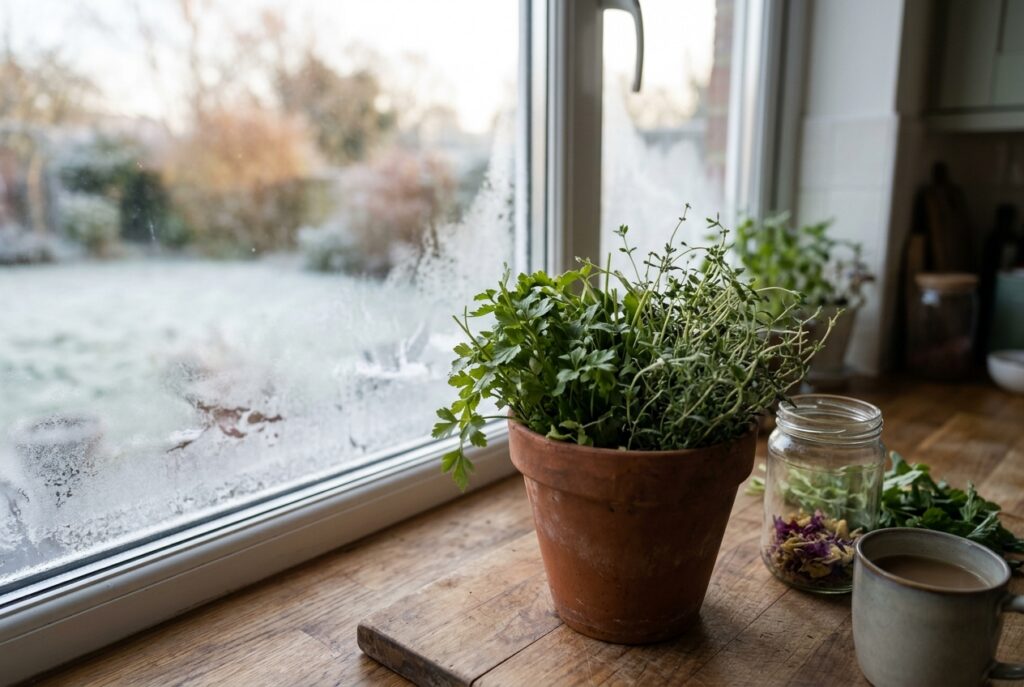
Overwintering herbs is easier than it sounds, because most of the work is knowing which herbs need you and which ones are fine on their own. Thyme, sage and mint shrug off frost. Basil doesn’t. Rosemary sits somewhere in the middle, depending on how cold your garden gets.
I once left a pot of basil outside a few nights too long in autumn, and one frosty morning every leaf had gone black and floppy, like cooked spinach. Basil comes in first now.
This is the short version for herbs already growing in your garden or in pots outside: which ones stay put, which need a little protection and which come indoors before the first frost. (Keeping herbs growing on a windowsill all winter is a different job, so it has its own guide: [link: which herbs grow on a windowsill in winter].) I checked all of this against the RHS and several university extension services. The links are at the end, if you’re a research nerd like me.
What does overwintering mean for herbs?
Overwintering herbs means helping them get through the cold months so they can regrow in spring. Hardy herbs mostly need to be left alone, half-hardy ones need shelter from frost, wind and wet, and tender ones need to move somewhere warmer before the first frost arrives.
Quick rules for overwintering herbs
- Sort your herbs into three groups first: hardy (they stay out), half-hardy (they need protection) and tender (they come in). The rest of this guide follows those groups.
- Hardy is local. NC State Extension lists the same herb as fine in one part of its state and risky in another, so judge by how cold your own garden gets, not by the label alone.
- Cold plus wet is the dangerous mix. Rosemary, thyme and lavender want well-drained soil or gritty compost, whatever the weather does.
- Roots in pots are more exposed to cold than roots in the ground, so potted herbs need extra protection: a layer of mulch on top, a sheltered spot, sometimes a wrap.
- Hold off on pruning until after the first frost, then keep it light, especially on woody herbs like rosemary and thyme.
- Water through dry winter spells. NC State says evergreen plants can lose water on sunny winter days even when the ground is frozen.
- Bring tender herbs in before the first frost. Illinois Extension says to bring houseplants indoors once temperatures stay below about 13°C (55°F).
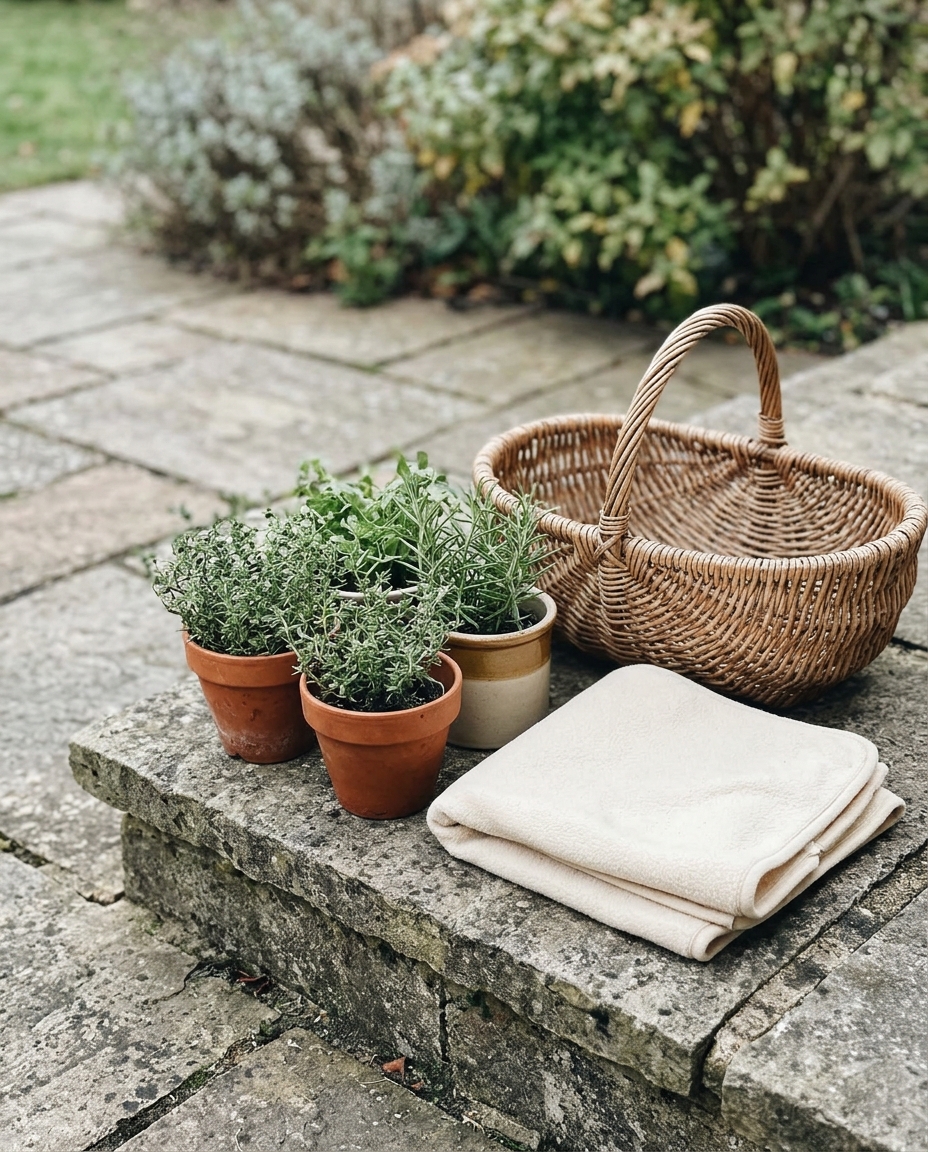
Overwintering herbs you can leave outdoors
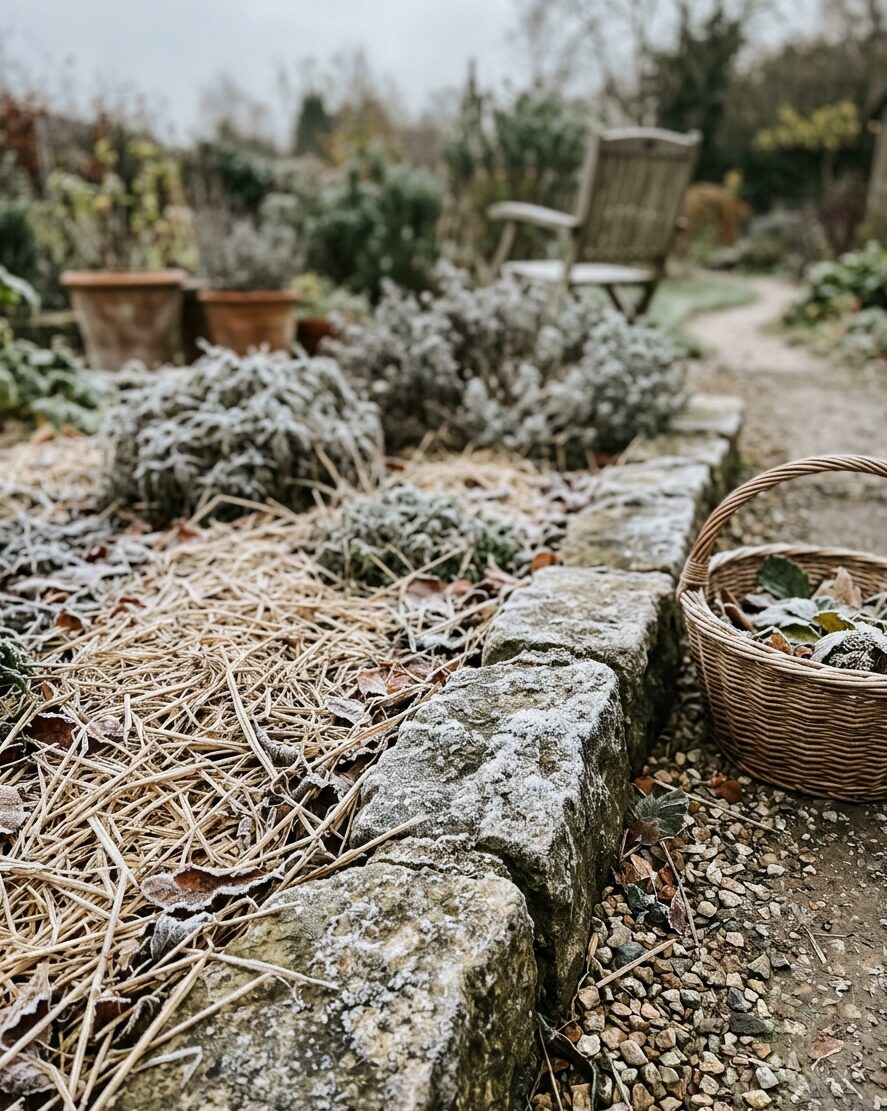
Six overwintering herbs that mostly look after themselves. If you’re short on time, this is the group to relax about. When it’s time to harvest what’s left, my guide to how to dry herbs at home covers the how.
1. Thyme
What it does in winter: the RHS says most thyme sold tolerates frost and British winters, though varieties differ, so check the label.
What to do: wet is its enemy, more than cold. The RHS says thyme dislikes damp conditions in winter and its roots can rot, so plant it in free-draining soil, add a grit mulch to lift the leaves off damp ground and cover it with a cloche in a wet winter. In a pot, use gritty compost and move it somewhere sheltered, close to a building where the rain doesn’t reach.
Know this: NC State Extension suggests covering silver and lemon thyme with evergreen boughs so the leaves don’t dry out. And don’t cut hard into old wood: the RHS says it’s risky, because the stems may not grow back.
2. Sage
What it does in winter: NC State Extension lists sage as hardy across all its regions.
What to do: a light mulch and some shelter from wind.
Know this: after a severe winter it may look completely dead. NC State says to scrape a few stems, and if they’re green underneath, wait until new growth starts before you prune.
3. Oregano
What it does in winter: the RHS lists oregano among the herbs that can stay outdoors all year once established.
What to do: mostly leave it alone. NC State says to avoid heavy pruning in late summer and autumn, so skip the big haircut once the weather turns.
Know this: NC State says hardiness varies by species. If yours is a fancy variety rather than plain oregano, check how hardy that one is.
4. Lavender
What it does in winter: NC State Extension lists lavender as hardy across all its regions, though it varies by variety.
What to do: mulch lightly, give it shelter from wind and make sure the drainage is good.
Know this: NC State says wet soil can reduce lavender’s winter hardiness. It’s the same story as thyme: wet roots do the damage, so pots need drainage holes and a gritty mix.
5. Mint
What it does in winter: the RHS says mint is a perennial that dies back over winter and regrows in spring, and that most mints are fully hardy. NC State says mulch alone protects it down to about -29°C (-20°F).
What to do: cut old stems back any time from late autumn until spring, just before new shoots appear. If it lives in a pot, mulch the top, because roots in a pot feel the cold more than roots in the ground.
Know this: you can have fresh mint at Christmas. The RHS says to bring a potted plant onto a sunny windowsill in autumn, and that cuttings taken indoors in November give you fresh mint by Christmas. And if you’re growing mint for your cup, my guide to herbs for tea has the rest.
6. Chives
What it does in winter: the leaves die back in autumn (RHS). NC State lists chives as hardy and says mulch alone protects them to about -29°C (-20°F).
What to do: a light mulch, and that’s it. If you’d like to keep picking, the RHS says to lift a clump into a pot and keep it on a sunny windowsill.
Know this: the University of Georgia says chives do better indoors than almost any other herb. Trim them back when you dig them up, to soften the shock.
Overwintering herbs that need a little protection
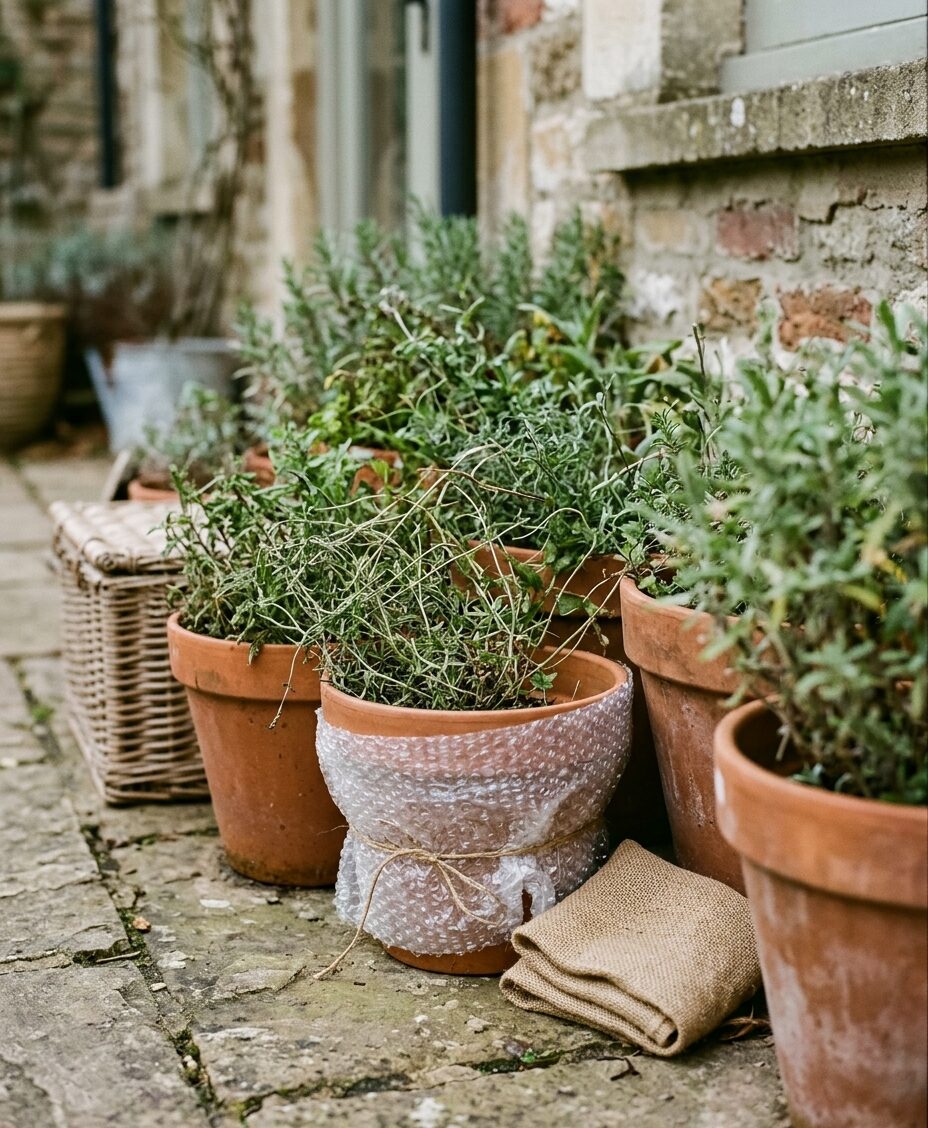
These three overwintering herbs can get through winter outside, but a cold snap, a wind or a wet spell can finish them off. A bit of shelter makes all the difference.
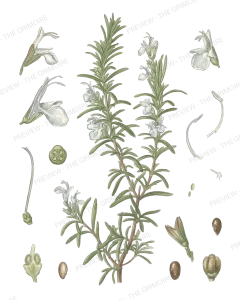
7. Rosemary
What it does in winter: the RHS says rosemary is hardy across most of Britain, and that well-established plants survive temperatures down to about -8°C (18°F). Harsh frost and cold wind can still damage it, and in extreme cases kill it.
What to do: when a very cold spell is forecast, cover the plant with fleece, hessian or an old bedsheet. Potted rosemary is more vulnerable than rosemary in the ground, because prolonged cold can freeze the compost and roots. The RHS says to group the pots together, wrap them in blankets or bubble wrap, or move them to a greenhouse, porch or the shelter of a wall.
Know this: cold, wet compost rots the roots, so rosemary must never sit in waterlogged compost, and the pot needs drainage holes. In colder parts of the US, NC State Extension says to bring it indoors or mulch it heavily, and the University of Georgia says it moves indoors easily.
Funny thing is, not a single one of my rosemaries has made it through a winter. I usually just start from scratch in spring with a new little pot (I know, I know). If yours keeps dying too, it’s probably the wet more than the cold, so check that drainage hole before you buy another one.
8. Bay
What it does in winter: the RHS calls bay hardy, but says harsh frost and cold wind can damage the leaves, kill some or all of the top growth and, in extreme cases, the whole plant.
What to do: when a harsh frost is forecast, cover smaller plants overnight with fleece, hessian or an old bedsheet. Container plants are especially vulnerable, because prolonged cold can freeze the compost and roots, so group pots, wrap them or move them to a greenhouse, porch or the shelter of a wall.
Know this: keep bay out of strong winds, and don’t let the compost get waterlogged, because cold, damp soil can rot the roots. If frost does burn some shoots, the RHS says to cut them out in spring.
9. Parsley
What it does in winter: parsley is a biennial, which means it grows leaves in its first year and flowers in its second. The RHS says outdoor parsley dies back over winter.
What to do: to keep picking, move a potted plant indoors or into a greenhouse or cold frame, or cover plants in the ground with cloches. With enough light and warmth, they keep producing new leaves.
Know this: the RHS says it isn’t worth keeping parsley into its second year for cropping. Sow fresh next spring and treat it as an annual.
Overwintering herbs to bring indoors
Two overwintering herbs that really shouldn’t be left to chance: they won’t forgive a frost.
10. Basil
What it does in winter: the RHS says basil isn’t hardy, dislikes cold, damp conditions and needs warmth. NC State Extension lists it as a tender annual.
What to do: bring it indoors before the first frost, either as the whole plant in a pot or as rooted cuttings (NC State). Keep it warm, bright and frost-free; the RHS suggests a sunny windowsill.
Know this: many basils are perennial, says the RHS, but they’re usually grown as annuals because they need so much warmth and sunlight. If yours sulks indoors, you’re not doing it wrong.
11. Lemon verbena
What it does in winter: NC State Extension lists lemon verbena as hardy only in the mildest part of its state, the coastal plain, and the RHS rates it hardy only in coastal and relatively mild parts of Britain.
What to do: bring it indoors or mulch it heavily. NC State also describes cutting it back, covering the stump with soil and adding a thick layer of mulch.
Know this: brought indoors, it will lose its leaves (NC State Extension). It’s a deciduous plant, so that’s normal. Don’t throw it away.
How to bring herbs indoors for winter
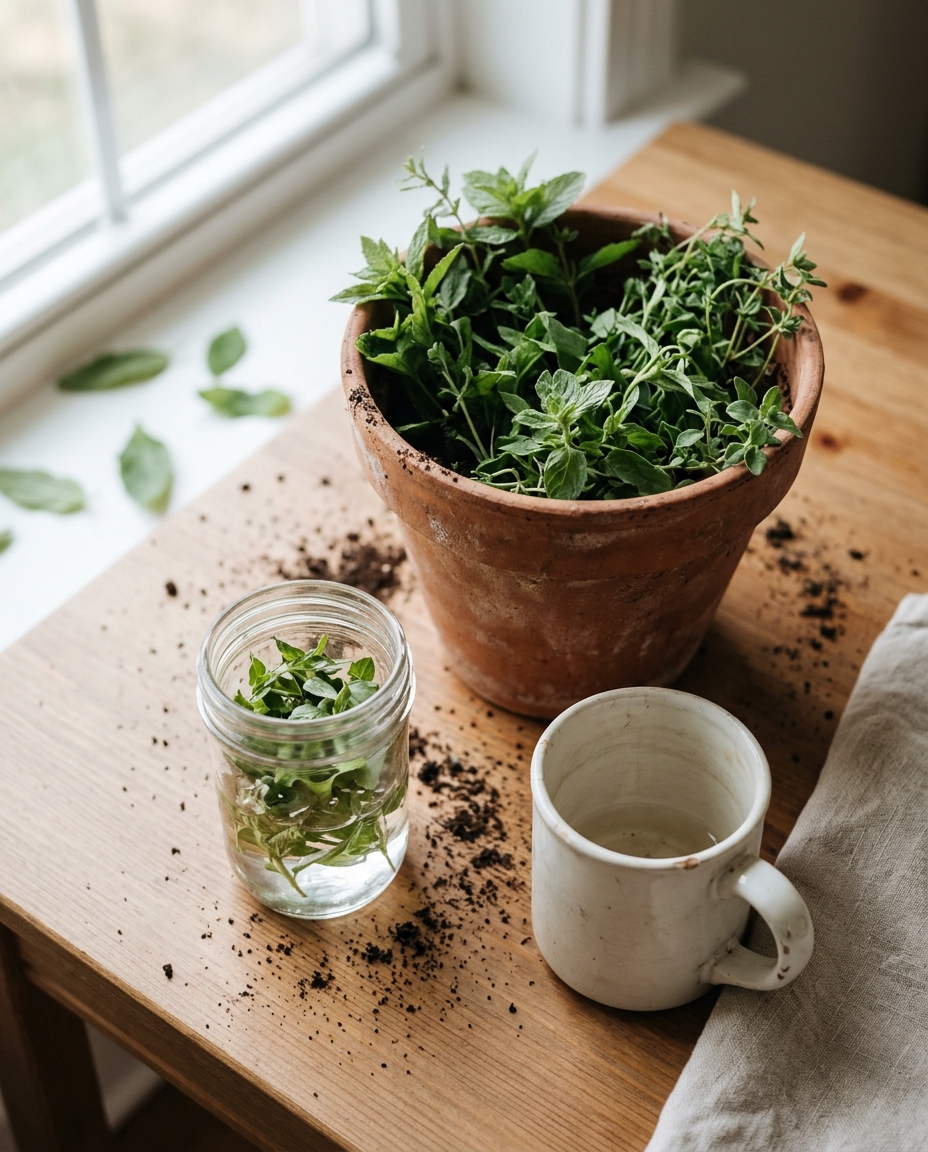
- Wait for the right moment. Leave herbs outside in a sunny spot until frost is near, then bring them in (University of Georgia). Tender herbs like basil go in before the first frost.
- Pot them up. Dig up the plant with a good root system and put it in a pot with drainage holes. The University of Georgia suggests a pot about 30 cm (12 in) across for herbs you move in and out.
- Check for pests. Illinois Extension says to look at the leaves, the undersides and the soil for aphids, whiteflies, mealybugs, scale and spider mites, and to rinse plants with water. If rinsing doesn’t work, it suggests insecticidal soap or neem, following the label (check it’s suitable for plants you’ll eat), or throwing out a heavily infested plant.
- Keep them apart for a while. Illinois Extension says to isolate new arrivals for three to four weeks before they join your other houseplants.
- Give them the brightest window you have, ideally south- or west-facing (Illinois Extension). Water less, let the soil dry a little between waterings, and stop feeding until spring.
- Keep them away from cold draughts and heating vents (Illinois Extension). Indoor air is also much drier than outdoor air, and the University of Georgia says that dryness stresses plants.
The University of Georgia says chives, rosemary, basil, thyme and mint all manage indoors, though thyme needs a careful hand with the watering.
Overwintering herbs FAQ
Which herbs come back every year?
Thyme, sage, oregano, lavender, mint and chives are the dependable ones in most gardens. Mint and chives die back above ground in autumn and regrow in spring, so a bare pot in January doesn’t mean they’re gone.
Can herbs stay outside in pots all winter?
The hardy ones can, but the University of Maine says there’s never a guarantee for potted herbs. Roots in pots are more exposed to cold, so add a 5 to 7 cm (2 to 3 in) layer of mulch on top, shelter them from drying winds and don’t let the compost get waterlogged.
When should I bring herbs inside?
Tender herbs like basil before the first frost, and potted herbs you want to keep picking once temperatures stay below about 13°C (55°F).
Should I cut herbs back before winter?
Wait until after the first frost, then keep it light. The University of Maine says pruning too early can set off a flush of new growth right at the end of the season, and NC State says not to prune woody herbs hard in the weeks before the first severe freeze. Light pruning after frost is fine.
One last question
Which of your herbs are you not sure will make it through the winter? Tell me, I’m curious, and tell me roughly where you are, because overwintering herbs in a cold garden and in a mild one are two different stories. If you want to know what each herb likes, every page of the Grimoire has an In the garden line. And if you’re just starting out, my guide to 3 easy herbs to grow for beginners is a good next read.
miru
I’m not a herbalist, just a curious person learning in public. This isn’t medical advice.
Sources
- RHS: herbs in containers
- RHS: how to grow rosemary
- RHS: bay
- RHS: how to grow thyme
- RHS: how to grow mint
- RHS: how to grow chives
- RHS: how to grow parsley
- RHS: basil
- NC State Extension: winterizing the herb garden
- University of Maine Cooperative Extension: preparing potted perennial herbs for winter outside
- University of Georgia (CAES): bring your fall herb garden indoors
- University of Illinois Extension: tips for moving houseplants indoors and overwinter care
- RHS: Aloysia citrodora (lemon verbena)
- NC State Extension Plant Toolbox: lemon verbena