There’s a moment in autumn when you look at your herbs and think: I want to keep this. Here’s how to dry herbs at home, the simple way.
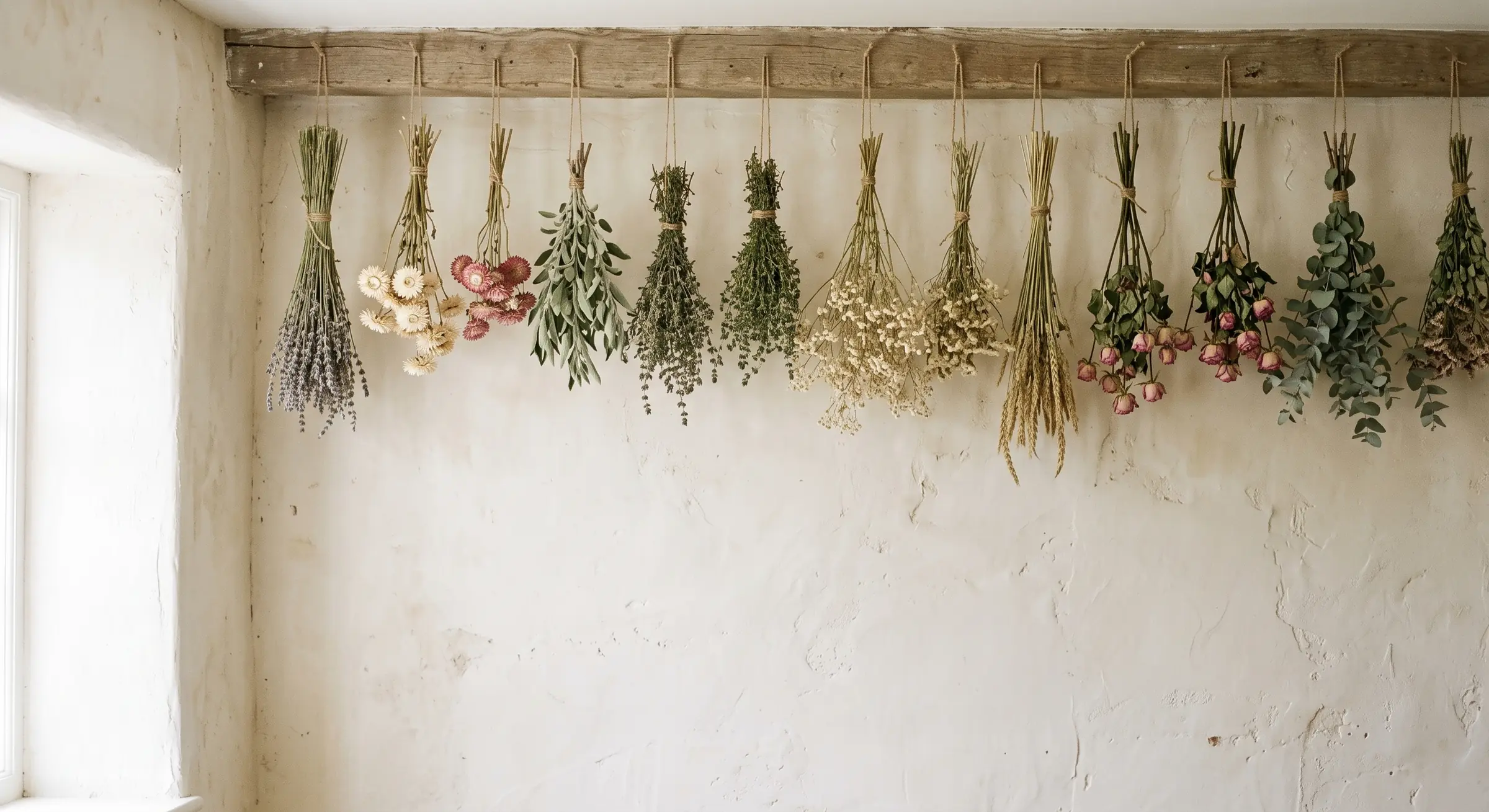
At my grandma’s, the drying spot was definitely the attic. She dried everything up there, from herbs to beetroot.
Drying is the easiest way to keep herbs. All it takes is warm, gently moving air and somewhere out of the sun. No gadgets needed.
When to harvest herbs for drying
- Morning, once the dew has gone. Leaves are fresh but dry, so they won’t go mouldy.
- Just before the flowers open, if you can. Food scientists at Oregon State University say this is when flavour is best.
- Label as you go. Once dried, many herbs look alike. A paper tag on each bundle saves guessing later.
- Be gentle. Bruised leaves lose their scent. Pop them in the shade straight away, never left lying in the sun.
How to dry herbs: two easy ways
Sturdy herbs like sage, thyme and rosemary have tougher leaves and less water inside. They’re the easiest to dry.
- Tie 5–6 stems into a small bundle with string or a rubber band. (Rubber bands tighten as the stems shrink.)
- Hang it upside down somewhere warm and airy indoors: a kitchen corner, an airing cupboard door, near (not touching) a radiator.
- Leave it alone for about a week.
Soft, juicy herbs like mint and lemon balm hold more water, and they’ll go mouldy if they dry too slowly. Give them the paper-bag trick:
- Tie a few stems into a small bunch. Small bunches dry faster.
- Snip a few air holes in a paper bag and slip the bunch in, stems out of the top.
- Close the top around the stems with a rubber band, and hang it where air moves.
- Any leaves that drop are caught in the bag.
Or lay single leaves on a tray lined with kitchen paper. They dry flat and keep their colour. Either way, expect 5 to 10 days.
Skip the sunny windowsill. Direct sun fades both colour and flavour.
How to tell when dried herbs are ready
Crumble a leaf between your fingers. If it crumbles easily and the stem snaps when you bend it, it’s done. If it bends, give it a few more days.
How to store dried herbs
- Glass jars with tight lids, kept somewhere cool, dark and dry. A cupboard beats an open shelf by the cooker.
- Store leaves whole. Crumble them only when you use them. Crushing early lets the scent escape.
- Write the date on the label. Dried herbs are at their best for six months to a year.
- Check your jars now and then. Any damp or clumping means moisture got in, so it’s time to say goodbye.
- Cooking tip: dried herbs are three to four times stronger than fresh. Use about a third as much.
No attic for me these days. My drying spot is a small room next to the kitchen, and it works just as well.
How to dry lavender: a note for next July
Lavender is the one you’ll want to plan for. We grow it at home: what started as a small batch by the terrace now comes back every summer as a bundle of almost 3 m². When it’s ready, I cut it back to small, almost bare stumps, and every summer it grows back bigger. (If yours is young, leave a little green on each stem. Cutting into old, bare wood can be the end of some lavenders.)
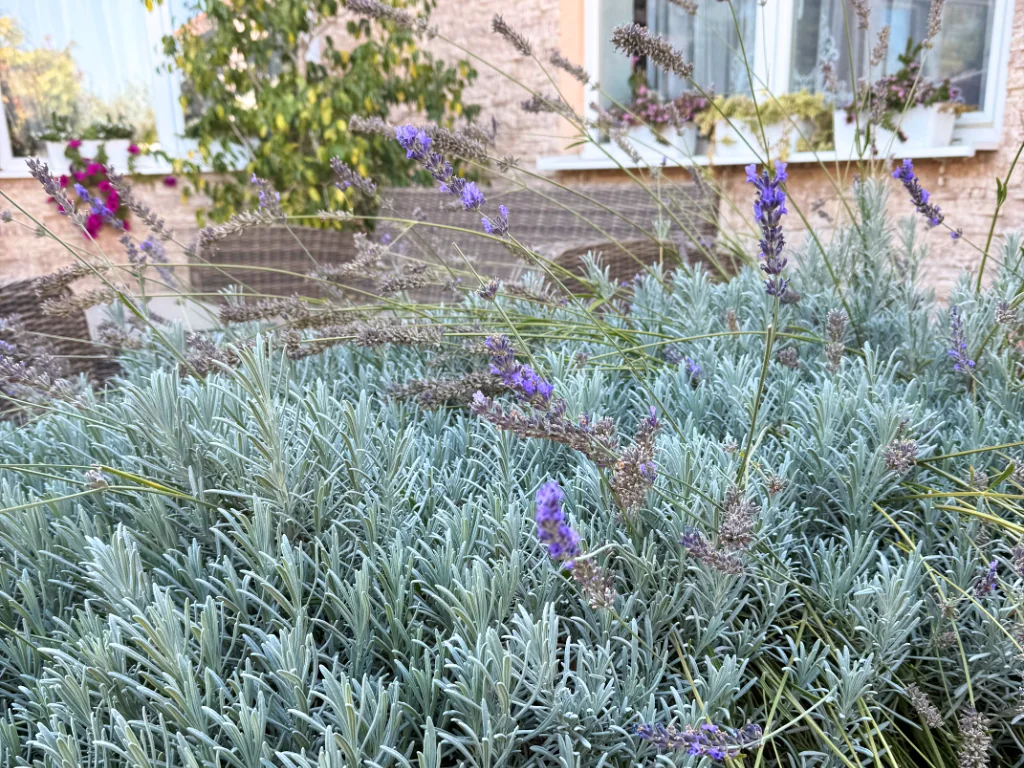
The moment I start smelling lavender in the air, I know autumn is coming. And the moment it smells sweetest, I know the bees definitely aren’t coming back this year.
For drying, a lavender grower in the Cotswolds waits until a third of the flowers on a spike have faded, a third are open, and a third are still in bud. Then cut long stems, bundle them and hang them upside down, just like sage.
Write it in your herb notebook now: July, lavender, a third, a third, a third.